Engineering
Technology
Aluminium · Composite · Racing
An aluminium chassis, the F7R engine derived from the Clio Williams, Michelin tyres developed for the race car. The Spider is a road car that thinks like a racing machine.
Structure
Aluminium
chassis
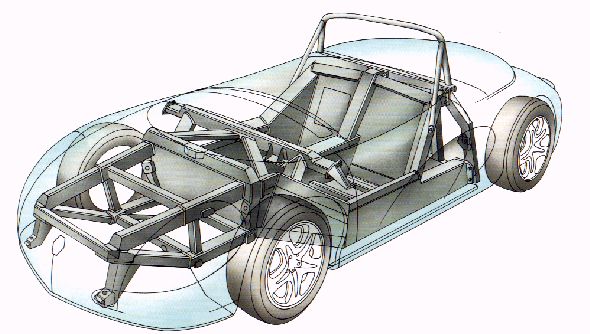
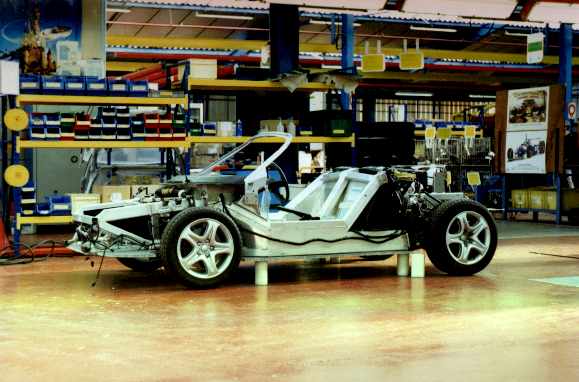
The Spider's backbone is an extruded aluminium chassis, manufactured by Norwegian company Hydro-Aluminium and delivered in three sections to the Dieppe factory. This structure is both lighter and more rigid than a comparable steel chassis — a direct inheritance from motorsport thinking.
The mid-engine rear-wheel drive layout (RMR) places the engine just behind the cabin, ahead of the rear axle. This ideal weight distribution — combined with the low kerb weight — gives the Spider exceptional handling balance.
Powertrain
The F7R
final iteration
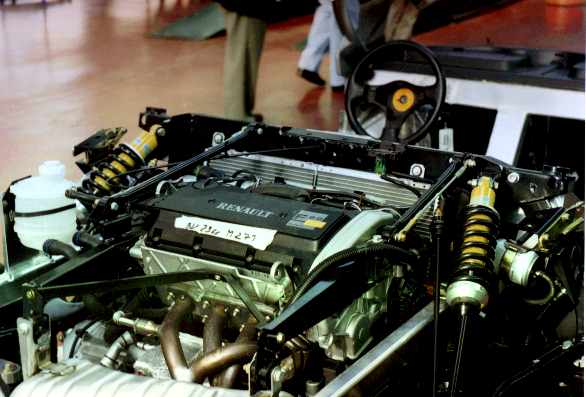
The heart of the Spider is a 2.0-litre 16-valve inline-four — the F7R unit, an evolution of the Clio Williams' 2.0 16V engine, also found in the Mégane Coupé 2.0 16V. It produces 150 hp at 6,000 rpm and 190 Nm of torque at 4,500 rpm, with a specific intake and exhaust system for this application.
Power is transmitted to the rear wheels via a 5-speed manual gearbox. In a car weighing under 1,000 kg, the result is a power-to-weight ratio that leaves many more powerful cars in its wake.
Handling
Suspensions
& brakes
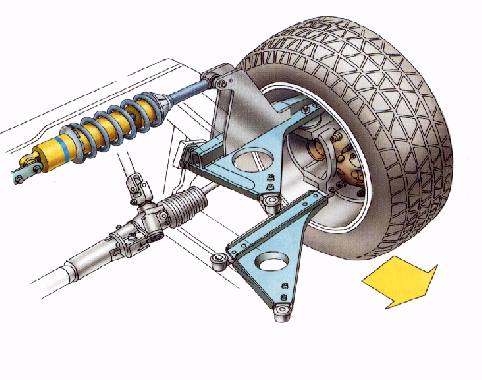
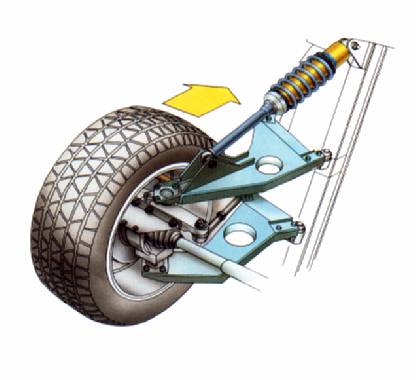
Both axles feature independent double-wishbone suspension. The geometry is directly derived from the Trophy competition version, delivering precise, communicative steering and excellent body control.
Ventilated disc brakes are fitted all round, with no ABS — delivering a raw, direct braking feel that demands and rewards driver skill.
Specifications