Ingenieurtechnik
Technology
Aluminium · Composite · Rennsport
Ein Aluminiumchassis, der aus dem Clio Williams stammende F7R-Motor, Michelin-Reifen für die Rennstrecke — der Spider ist ein Straßenfahrzeug mit Rennstrecken-DNA.
Struktur
Aluminium-
chassis
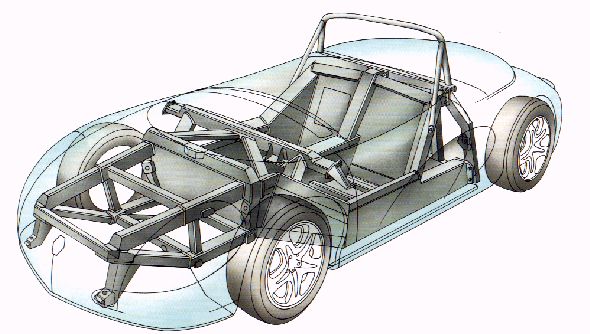
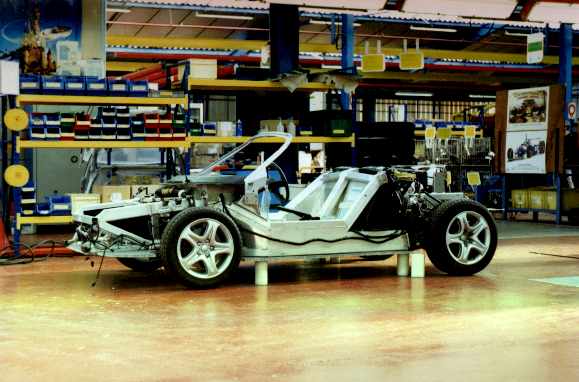
The Spider's backbone is an extruded aluminium chassis, manufactured by Norwegian company Hydro-Aluminium and delivered in three sections to the Dieppe factory. This structure is both lighter and more rigid than a comparable steel chassis — a direct inheritance from motorsport thinking.
The mid-engine rear-wheel drive layout (RMR) places the engine just behind the cabin, ahead of the rear axle. This ideal weight distribution — combined with the low kerb weight — gives the Spider exceptional handling balance.
Antrieb
Die letzte
F7R-Variante
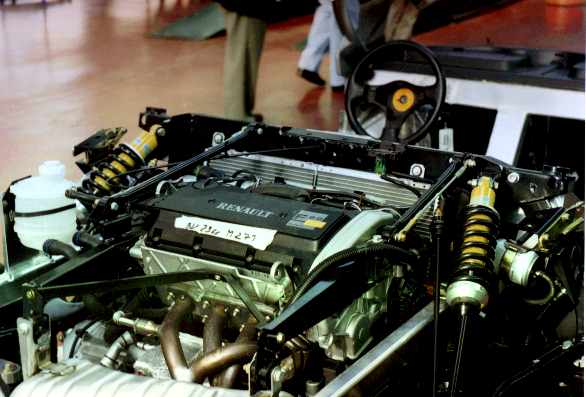
Das Herzstück des Spider ist ein 2,0-Liter-Vierzylinder mit 16 Ventilen — der F7R-Block, eine Weiterentwicklung des 2.0 16V der Clio Williams, der auch im Mégane Coupé 2.0 16V zu finden ist. Er leistet 150 PS bei 6 000 U/min und 190 Nm Drehmoment bei 4 500 U/min.
Power is transmitted to the rear wheels via a 5-speed manual gearbox. In a car weighing under 1,000 kg, the result is a power-to-weight ratio that leaves many more powerful cars in its wake.
Fahrwerk
Federung
& Bremsen
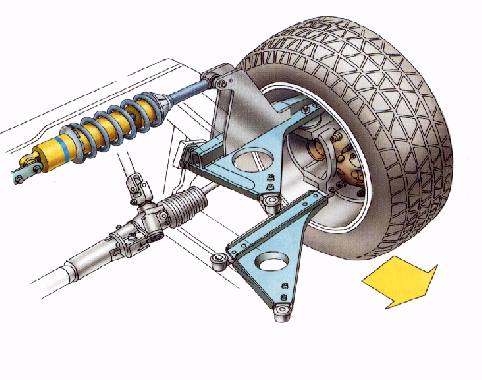
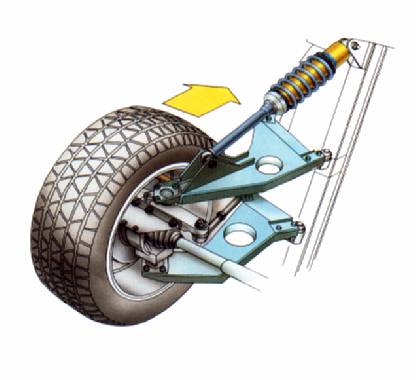
Both axles feature independent double-wishbone suspension. The geometry is directly derived from the Trophy competition version, delivering precise, communicative steering and excellent body control.
Ventilated disc brakes are fitted all round, with no ABS — delivering a raw, direct braking feel that demands and rewards driver skill.
Technische Daten