Aesthetics & vision
Design
Patrick le Quément
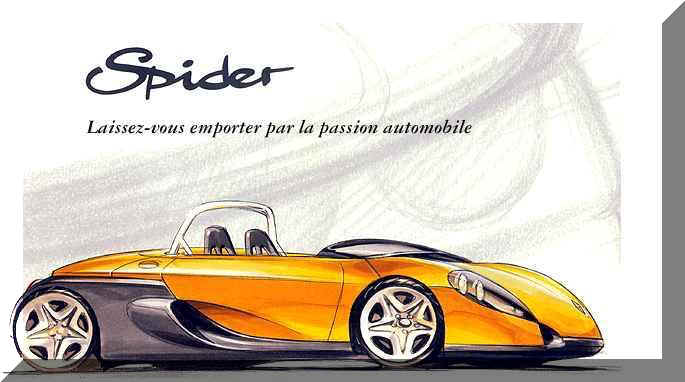
A car that breaks every rule. No windscreen, no roof, no concession. The Spider Renault Sport is the most radical expression of Patrick le Quément's vision for Renault design.
The designer
Patrick
le Quément
Born in Marseille in 1945, Patrick le Quément studied industrial design in Birmingham before embarking on a career that took him through Simca, Ford and Volkswagen-Audi. Recruited by Renault in 1987, he became Vice-President of Design and imposed design as a strategic discipline, reporting directly to the Chairman — not to the engineering department.
His motto — "Design = Quality" — shaped an entire generation of Renault cars: the Twingo, the Clio, the Scénic, the Laguna. But the Spider remains his most uncompromising statement: a car conceived as pure sculpture in motion, where function follows form.
Design philosophy
A car with
no concession
No windscreen
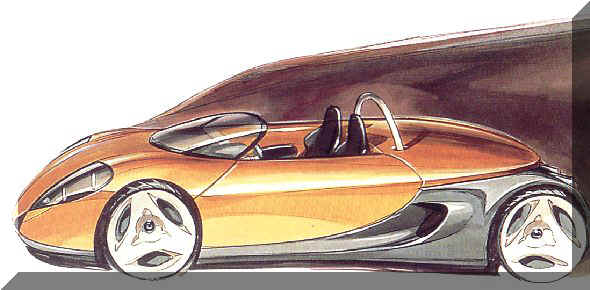
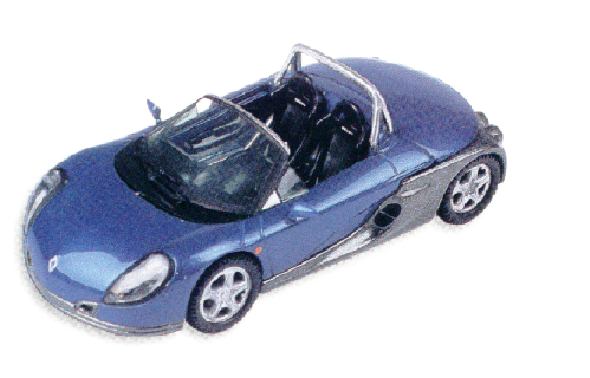
The original Spider launched with a simple aeroscreen — a small deflector barely above the dashboard. The absence of a traditional windscreen gives the car its iconic, unfiltered profile. A full windscreen version was introduced in 1997 for broader market appeal, but the aeroscreen remains the purist's choice.
The roll bar as sculpture
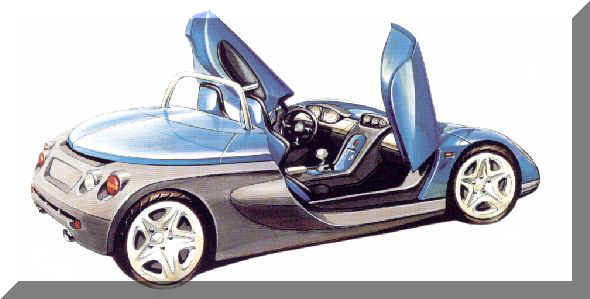
The prominent roll bar, painted in body colour or left in its natural grey, structures the entire silhouette. It is at once a safety element, an aesthetic statement and the car's visual signature. Remove it and the Spider loses its soul.
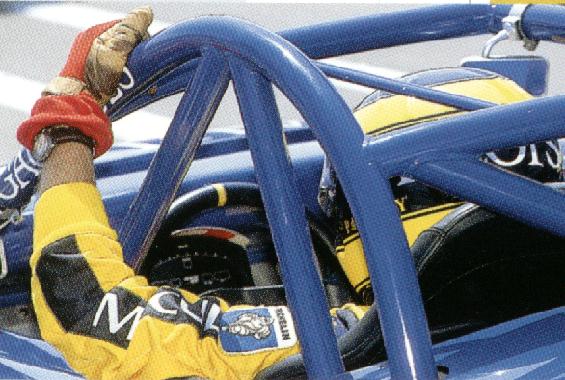
Polyester RTM bodywork
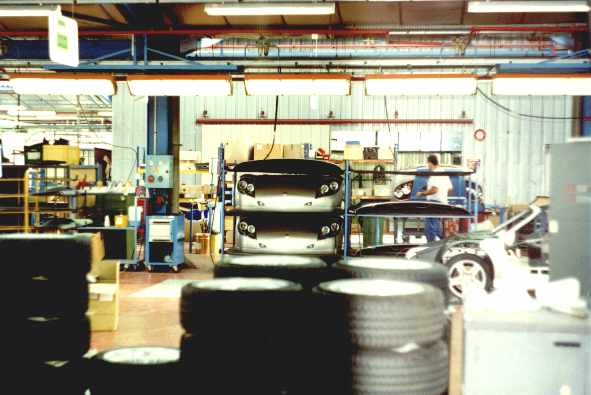
The bodywork is made from RTM (Resin Transfer Moulding) polyester — a composite technique that allows complex, organic shapes impossible with steel. The result is a skin that seems to have been shaped by the wind rather than by tooling.
Scissor doors
The Spider's doors open upwards, scissor-style — a dramatic gesture that underlines the car's theatrical character. Combined with the low sill of the aluminium chassis, they make entry and exit a choreography in itself.
Nacré colours
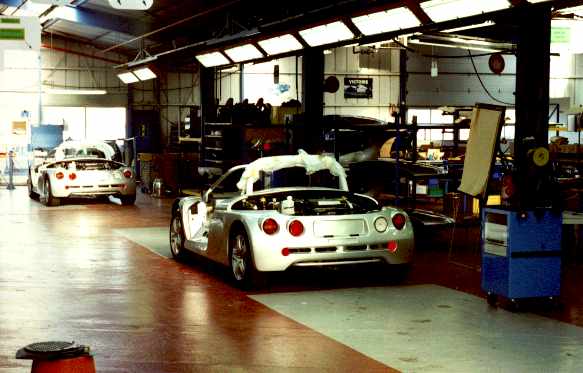
Three iridescent colours were offered at launch — Jaune Sport Irisé (535), Bleu Sport Sirtaki (250) and Rouge Sport Feria (273) — each shifting subtly in different light. The bi-tone Gris Xerus (630) underbody contrasted with the body colour. A Gris Titane (647) monochrome version completed the range.
Minimal interior
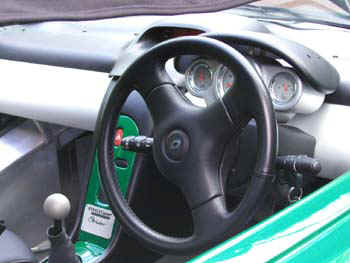
Inside, nothing is superfluous. The dashboard is stripped to its essentials — instruments, a steering wheel, two bucket seats. No storage, no soft trim, no luxury. The Spider is a driving machine, not a grand tourer. Every gram saved is a tenth of a second gained.
Proportions